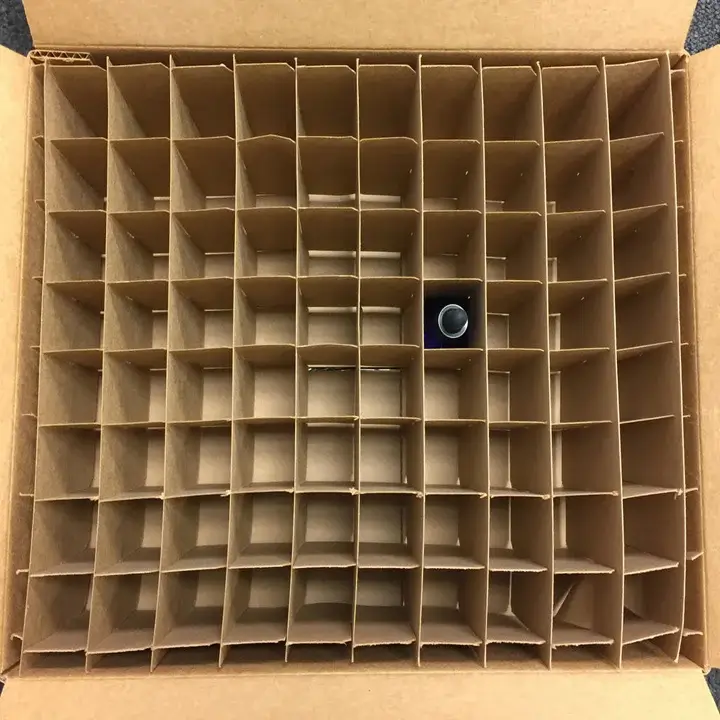

Custom Cell Dividers
Our factory-direct custom cell dividers help keep glass bottles, jars, candles, and other fragile items separated, upright, and safe from damage during shipping and storage. Each divider is cut to fit your box size and cell count. We ship them empty and ready for you to use with your products.
If you require custom sizes or printing, please complete the quote form below. We will provide an accurate price for your project.
Get a Free Quote for Custom Cell Dividers
Cell Divider Specifications & Details
Why Cell Dividers Are the Industry Standard for Fragile Product Shipping
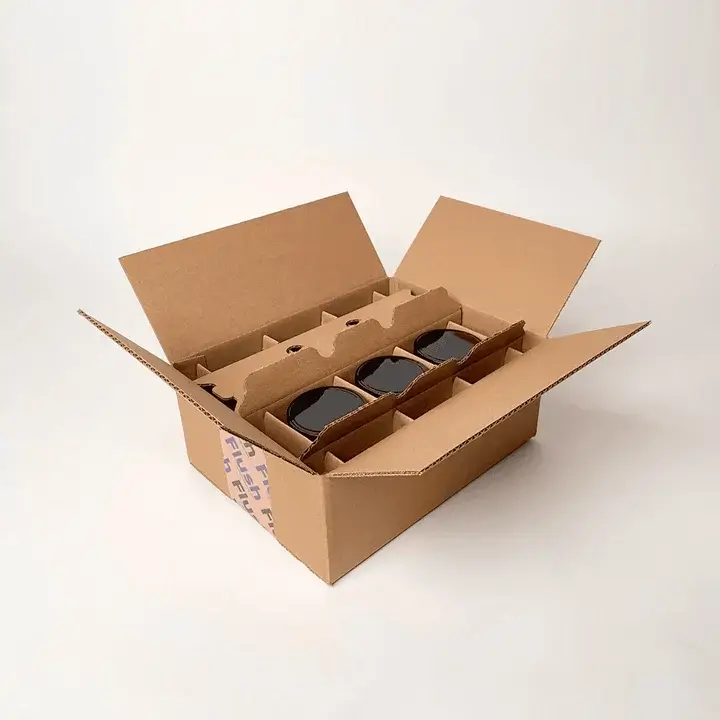
When you're shipping glass bottles, ceramic jars, wine bottles, candles, or any product that can't afford to make contact with a neighboring unit during transit, the structural logic of a cell divider becomes immediately clear. A cell divider converts the interior of a standard shipper box into a series of individual, walled compartments — each one cradling a single item, isolated from lateral movement, and supported vertically against drop impact. Unlike loose fill or generic foam sheets, a properly engineered cell divider holds each product in a fixed spatial relationship with the others, so even if the outer box flexes under compressive stack loads, the product-to-product gap is maintained. At Kreative Packaging, we manufacture custom cell dividers from our facility serving businesses across the United States. Every insert is engineered to your specific box interior dimensions, your product footprint, and your required cell count. Whether you need a 2×2 layout for premium gift sets or a 6×6 grid for high-volume beverage or fragile consumable shipping, we produce the tooling, die-cut, and score each divider to exact tolerances so it drops into your outer carton without shimming, taping, or adjustment on the line.
Precision Grid Construction: How These Dividers Are Actually Made
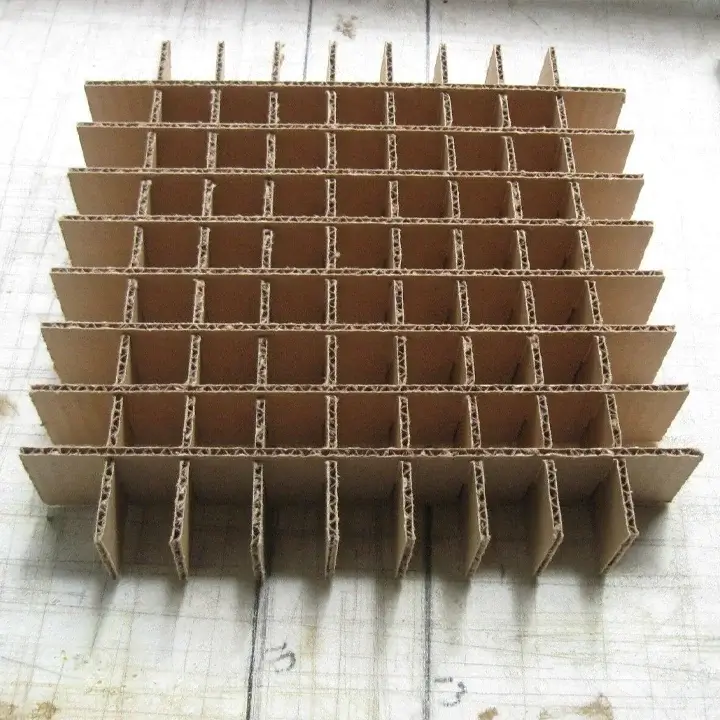
Our cell dividers are produced using interlocking slot-and-tab construction — two sets of parallel scored and slotted strips that interlock at 90-degree intervals to form a rigid grid. The slot depth is calculated to exactly half the divider height, so the strips lock flush at the midpoint and the assembled grid sits perfectly level inside the box. This manufacturing method requires no adhesive, no staples, and no assembly hardware. The finished grid is flat-packed for storage and pops open during fulfillment at the rate of a few seconds per unit. The material itself is selected based on your product's weight, bottle diameter, and shipping conditions. For lighter retail items like 2 oz candles or 4 oz glass jars, we typically recommend 18pt or 24pt SBS paperboard, which offers clean cutting, a smooth surface for printed branding if needed, and a caliper rigid enough to resist compression without adding unnecessary weight. For heavier bottles — wine, spirits, olive oil, glass supplement containers — we move to B-flute or E-flute corrugated, which provides the column strength to handle stacked pallet loads without collapsing the cell walls. The fluted structure also acts as a secondary shock buffer, absorbing lateral impact energy that paperboard alone would transfer directly to the product.
Which Products Are These Built For?
Cell dividers serve an exceptionally wide range of industries, which is partly why they've remained a core packaging format for decades. In the food and beverage sector, they're the default internal structure for glass bottle multipacks — anything from craft beer four-packs to olive oil gift sets to artisan hot sauce collections. The divider keeps each bottle from contacting its neighbor, eliminating the chipping and cracking that makes glass-on-glass contact so damaging during last-mile delivery. In the beauty and personal care industry, brands packaging perfume bottles, serum vials, facial oil rollerballs, or any glass dropper container rely on cell dividers to maintain presentation quality from warehouse to unboxing. A cracked bottle or abraded label is a returned order and a damaged brand impression — both of which cost far more than the per-unit insert expense. For candle manufacturers, cell dividers prevent wax surface scuffing and label smearing, particularly for brands where the unboxing visual matters to their customer experience. Beyond fragile consumer goods, we regularly produce cell dividers for industrial and laboratory contexts: test tube shipping trays, sample vial organization, electronic component separation, and ceramic or porcelain part transit packaging. If you're working with a product that needs spatial isolation inside a shipper, and you want that protection to be structurally reliable rather than dependent on how carefully each fulfillment worker packs the box, a custom cell divider is the right solution. You might also find our heavy-duty corrugated box partitions worth considering for applications where the load per cell is significantly higher, or where a more open partition structure fits your fulfillment workflow better than a closed-grid cell format.
Branding, Printing, and Presentation Inside the Box
Most cell dividers ship unprinted — they're structural components, and the expectation is that the outer box carries the brand identity. But for premium gifting, subscription boxes, and direct-to-consumer brands where the interior unboxing experience is part of the product, a printed cell divider adds a meaningful brand touchpoint that most competitors don't bother with. We can print on the divider strips before die-cutting and slotting, which means your brand colors, logo, pattern, or messaging appears on the visible face of each cell wall when the grid is assembled. The effect is a fully branded interior that reinforces the product's premium positioning at the moment of unboxing. This is particularly effective for wine, spirits, and high-end personal care brands. Print options include single-color flexo for budget-conscious runs, or full CMYK offset for photo-accurate color work on premium coated stocks. For brands that want a tactile quality signal without print costs, we offer Kraft natural brown dividers, which communicate craft and sustainability — a finish that works especially well for food, wellness, and artisan product categories. Alternatively, our coated white SBS stock gives a clean, clinical presentation that suits pharmaceutical, supplement, and beauty verticals well. If your packaging system also includes a lidded or telescoping outer carton, take a look at our range of die-cut cardboard trays — many brands combine a tray base with a cell divider insert to create a two-layer protection and presentation system that performs extremely well for high-value gift packaging.
Logistics Efficiency and Fulfillment Line Compatibility
One of the most underappreciated advantages of a well-designed cell divider is what it does for your fulfillment speed. When dividers are manufactured to the correct flat-pack dimensions and slot tolerances, they drop into your outer carton in a single motion, the grid pops open in seconds, and products seat into cells without force-fitting or adjustment. That means your pick-and-pack throughput stays high even when packing fragile items that would otherwise require individual wrapping or manual nest placement. We engineer each divider set to be as flat as possible in transit — a stack of a hundred divider sets occupies a fraction of the storage footprint of assembled foam inserts or pre-formed trays. For brands with limited warehouse square footage or those receiving inventory on a just-in-time schedule, the storage density of flat-packed cell dividers is a meaningful operational advantage. For higher-volume runs where fulfillment automation is involved, we can adjust slot widths, cell wall heights, and outer perimeter tolerances to match the mechanical tolerance range of your case-packing equipment. This type of detail-level engineering is where working with a manufacturer rather than a box broker makes a real difference — our team works directly from your box interior measurements and product specs, not from a catalog standard. Brands that operate across both retail shelf and e-commerce channels often need a divider configuration that serves both contexts without a second SKU. For multi-channel packaging needs, our interlocking cardboard box dividers offer a complementary format worth reviewing alongside cell dividers when designing for dual-channel distribution.
Factory-Direct Pricing and What Drives the Per-Unit Cost
Because we design, print, and manufacture everything in-house at our New York facility, there's no middleman margin in our pricing structure. The per-unit cost of a cell divider is primarily driven by four variables: material grade, cell count (which determines the number of strip cuts per set), print complexity, and order quantity. A basic 4×4 unprinted Kraft paperboard divider for a standard wine four-pack will cost considerably less per unit than a 6×6 printed E-flute divider for a premium spirits gift set — but both are available at wholesale pricing that reflects direct manufacturing economics. Our minimum order quantity is 50 units, which is intentionally accessible for small-batch brands, product launches, and specialty runs. Volume pricing scales from there, and our team will provide a transparent per-unit breakdown at each quantity tier so you can make an informed decision based on your order frequency and storage capacity. All orders ship free within the United States, and our standard production-plus-shipping turnaround is 8–10 business days from artwork approval. For brands also working with foam-based protection for especially delicate or high-value items, our custom EVA foam inserts can be combined with a corrugated outer cell structure to create hybrid packaging systems that offer both rigid separation and soft-contact cushioning in a single solution.
Frequently Asked Questions About Custom Cell Dividers
Below are answers to the questions we hear most often from brands, fulfillment teams, and purchasing managers evaluating cell dividers for the first time or switching suppliers. If your question isn't covered here, our team is available to discuss your specific application in detail.
-
Our minimum order quantity is 50 units. This applies to all custom cell divider configurations, including printed and unprinted styles, across all material grades. The 50-unit MOQ is designed to be accessible for small brands, product launches, and specialty runs without requiring large upfront inventory commitments.
-
We offer SBS paperboard (18pt and 24pt), natural Kraft paperboard, B-flute corrugated, and E-flute corrugated. For lightweight retail products like small glass jars, candles, or cosmetic bottles under 8 oz, 18pt or 24pt SBS or Kraft paperboard is typically sufficient. For heavier items — wine bottles, spirits, glass supplement containers, or products shipped on pallets under stacking pressure — we recommend B-flute or E-flute corrugated for its column strength and impact absorption. Our team will recommend the right specification based on your product weight, bottle diameter, and shipping method.
-
Yes. We offer single-color flexo printing and full CMYK offset printing on cell divider strips before they are die-cut and slotted. The printed face appears on the visible surface of each cell wall when the grid is assembled inside the box. This creates a fully branded interior — an effective unboxing detail for premium gift sets, subscription boxes, and direct-to-consumer brands. Share your brand guidelines and we'll provide a print proof before production begins.
-
Our standard turnaround is 8–10 business days, which includes production and shipping to your US address. This timeline begins from artwork approval — not from order placement. Shipping within the United States is free on all orders. If you're working toward a specific in-hands date, let our team know when you request a quote and we'll confirm whether your timeline is achievable or discuss options.
-
All cell dividers are shipped flat-packed. The individual strips are pre-cut and pre-slotted — they interlock into the finished grid in seconds at your fulfillment station without any tools, adhesive, or additional assembly steps. Flat packing also means they store efficiently, occupying a fraction of the space that assembled inserts would require in your warehouse.