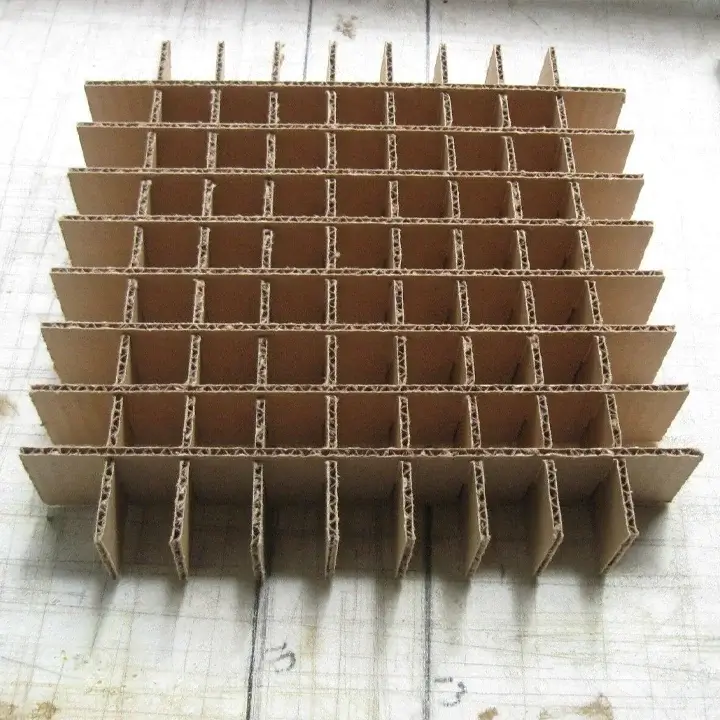

Custom Corrugated Partitions for Industrial Product Isolation
Our custom packaging for fragile items is designed to keep multiple products safe during shipping. Each divider is made from strong cardboard with interlocking joints, which helps protect against crushing and keeps items from rubbing together during transport. We make every order in our US facility, ship them empty, and offer free shipping across the country.
If you require custom sizes or printing, please complete the quote form below. We will provide an accurate price for your project.
Request a Custom Production Quote
Technical Specifications & Material Standards
Structural Engineering for High-Stress Transit Environments
When preparing multi-unit retail inventories or industrial components for multi-stage logistical freight, standard outer boxing alone is rarely sufficient to absorb torsional forces and direct impacts. At Kreative Packaging, operating out of our centralized production hub at 3 E 28th St, New York, NY 10016, we configure high-rigidity internal matrices that mitigate shipping risk. Our custom packaging for glass items and electronic parts acts as an internal load-bearing skeleton. By utilizing targeted B-flute or heavy-duty C-flute corrugated medium, these interlocking dividers dramatically raise the overall stacking capacity of your master shipping container. This architectural reinforcement intercepts downward vertical compression, distributing pallet weight evenly across the entire grid layout and preventing structural collapse in high-humidity fulfillment hubs or long-distance truck beds.
The manufacturing process relies on state-of-the-art computer-controlled die-cutting machinery to guarantee clean slotting geometries. This precise interlocking design prevents individual panels from shifting, warping, or disengaging under heavy vibrational friction. Traditional manual packing setups often suffer from alignment variations that cause product lines to jam on high-speed automated filling systems. Our clean-cut friction-fit joints drop seamlessly into corresponding master boxes, significantly reducing setup labor times and maximizing factory floor throughput. The tactile rigidity of our corrugated fibers offers substantial energy absorption, turning aggressive impacts into minor localized compressions that never breach the inner cells.
Why Choose Factory-Direct Custom Packaging for Fragile Goods?
Kreative Packaging controls the entire design, printing, slotting, and bundle-binding workflow within our advanced US manufacturing plant. By completely bypassing third-party sourcing brokers, we maintain a strict quality assurance protocol and offer authentic factory-direct wholesale pricing. This self-contained layout enables a nimble 8-10 business day turnaround time encompassing custom engineering, rigorous stress testing, and final drop-shipping. Whether your enterprise requires a short-run batch of 50 units for specialized heavy equipment components or tens of thousands of cells for automated packaging systems, we ensure structural integrity. Every grid matrix is delivered flat, completely empty, and bundled for compact warehousing, optimized to decrease storage footprint until needed on your active assembly line.
Advanced Material Performance: Thickness, Density, and Surface Protection
Selecting the exact material grade determines how your inner dividers respond to pressure, abrasion, and atmosphere. Our standard single-wall boards feature an outer linerboard made from high-density virgin Kraft fibers or smooth white clay-coated paperboard, flanking a precisely crimped fluted medium. For ultra-dense industrial mechanical pieces or volatile containers, we transition clients to a dual-wall structural setup that layers alternating flute profiles to damp disparate vibrational frequencies. The unbleached interior paperboard retains natural cellulose chains, creating a high-burst threshold that resists tearing when subjected to sharp metallic edges or heavy glass base friction.
Beyond structural deflection, surface-to-surface interaction is a critical engineering benchmark. Repeated vibrations during rail or highway transit can cause micro-abrasions, scuffing, or label degradation on high-end glass bottles or painted assemblies. To preserve aesthetic value and surface finish, our custom packaging for consumer electronics and premium glass uses soft-calendered linerboards that minimize friction points. For specialized supply chains, we offer anti-static chemical treatments directly to the paperboard formulation to shield delicate electrical boards from electrostatic charges during prolonged movement.
Maximizing Volumetric Density and Logistics Efficiency
Modern freight carriers compute shipping fees using exact dimensional weight calculations rather than simple scale metrics. Loose padding, poly-bags, and manual paper wrapping create unpredictable outer package dimensions, leading to unexpected price hikes at the fulfillment counter. Our precision-engineered cells maximize internal space utilization by placing products in tight geometric alignments. This allows you to pack the highest possible number of individual products safely inside a singular master carton. By lowering your overall box dimensions and expanding structural stability, your organization minimizes material waste and curbs carbon expenditure across transport legs.
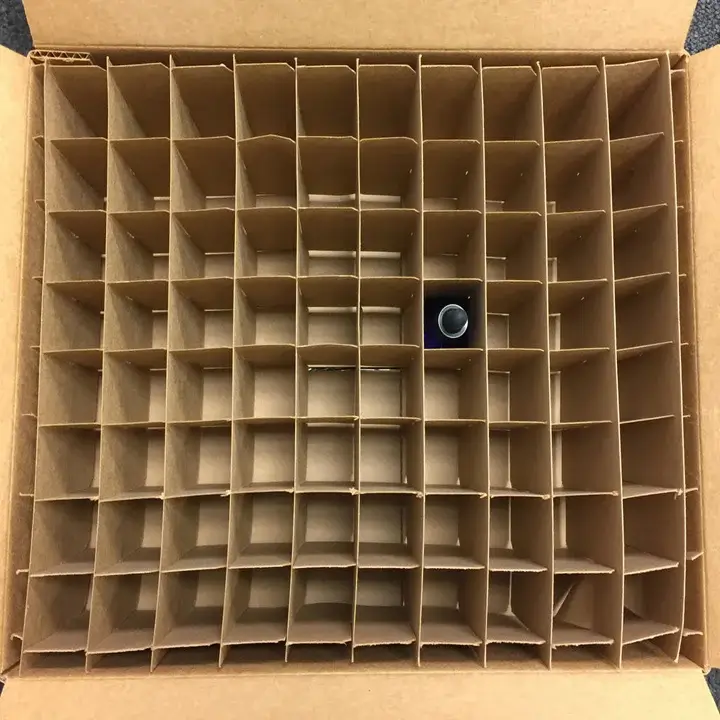
Additionally, the quick-fold mechanics of our interlocking panels optimize on-site packing lines. Workers can open the collapsed grid bundle and deploy the multi-cell partition into the master box with one smooth downward movement. The rigid partitions retain their internal cell squareness under fast, mechanical product placement, avoiding cell buckling that causes unexpected downtime on fast-paced conveyor setups. For custom fulfillment requirements, consider augmenting your layout with specialized precision-cut cell dividers designed specifically for glassware isolation, or review our heavy-duty stable interlocking box dividers for larger industrial equipment configurations.
Versatile Configurations Across Diverse Commercial Industries
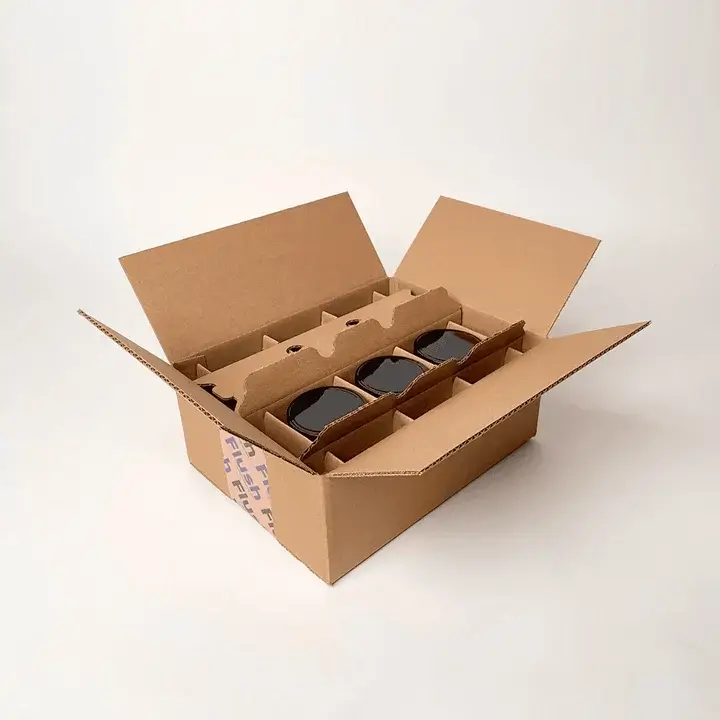
Because all protective inserts are built to order from empty raw stock, the dimensions, cell count, and aspect ratios can be adjusted to match any mechanical specification. In the high-demand beverage and specialty oil sector, these dividers prevent heavy glass containers from slamming together, acting as a flexible buffer that handles sudden thermal changes and rough conveyor transfers. In automotive component supply lines, complex metal gears or fragile cast components are held in isolated chambers to avoid metal-on-metal striking, preventing deep scratches or chipped threads before final assembly.
The medical component and scientific supply markets leverage white clay-coated formulations to ensure minimal dust shedding inside automated packing suites. Isolating delicate laboratory vials, diagnostic components, and calibrated optical gear inside a custom-sized grid protects them from sudden multi-axis drops. No matter the industry, our design teams compute precise tolerance clearances, creating a perfect balance between a snug product hold and rapid, non-binding extraction during unboxing.
Frequently Asked Questions Regarding Internal Protective Dividers
Explore deep technical answers covering our domestic manufacturing operations, specialized corrugated engineering practices, and logistics fulfillment criteria to ensure your transit run functions smoothly.
-
Single-wall construction consists of a single layer of fluted paperboard sandwiched between two flat linerboard pieces, making it ideal for light to medium-weight commercial components like cosmetics or glass jars. Double-wall systems utilize two layers of fluted medium and three flat sheets, dramatically elevating the Edge Crush Test (ECT) rating to withstand heavy industrial metal components or high-capacity bulk stacking configurations.
-
Our custom packaging for industrial goods is manufactured as flat, pre-slotted strips bundled tightly together to reduce your freight and warehousing costs. Upon arriving at your facility, the strips are engineered to effortlessly unfold or lock into place within seconds, ensuring rapid integration on the packing line without requiring adhesive fasteners or tools.
-
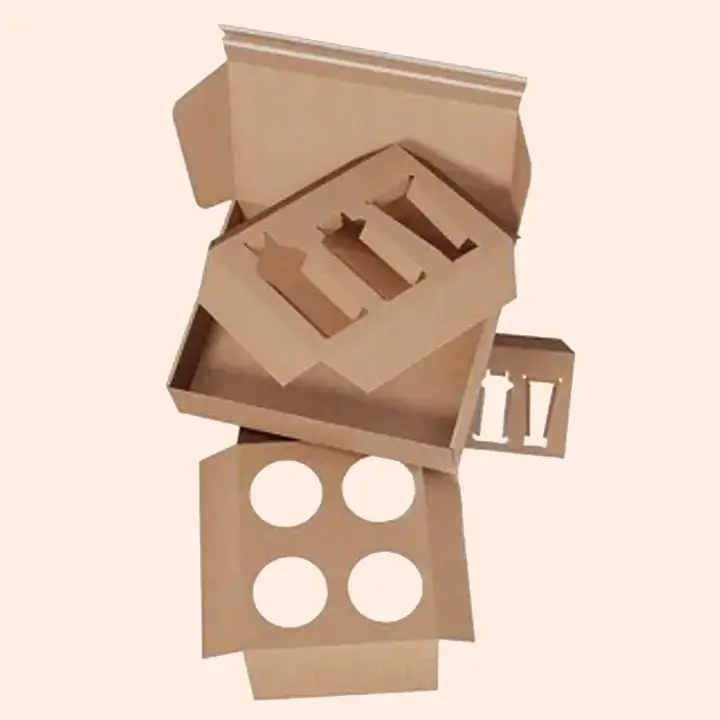
Yes. Because we operate an entirely in-house structural tooling facility, our engineers can create custom layouts featuring varying cell lengths, uneven grid configurations, or specialized notch heights to perfectly conform to irregular mechanical parts, electronic assemblies, or varied product assortments.
-
To shield premium products from vibrational friction, we provide custom packaging for glass with smooth, non-abrasive clay coatings or soft-calendered linerboard paper. This specific material configuration reduces paper dust shedding and micro-scratching on sensitive paint coatings, premium labels, and high-gloss plastic finishes during transit over rough terrain.
-
Our minimum order quantity is 50 units per custom configuration, catering to both emerging short-run commercial needs and massive industrial freight orders. From initial digital structural sign-off at our factory, complete fabrication, quality testing, and arrival at your domestic facility takes just 8-10 business days via our complimentary ground shipping infrastructure.